Location
- Minganji District; Lindi Region
- Republic of Tanzania
- Latitude: 8°55′ South
- Longitude: 38°64′ East
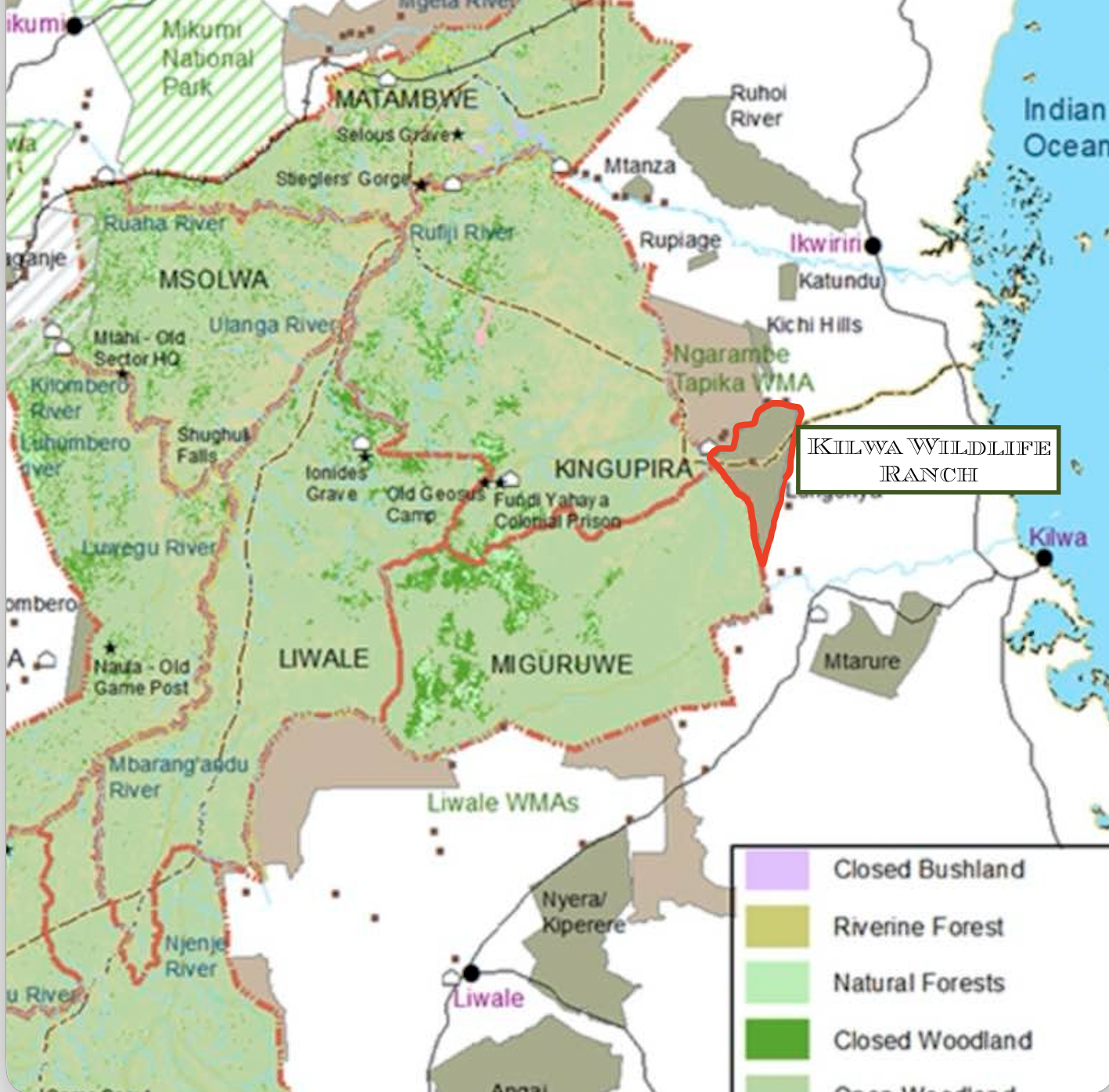
- Kilwa Wildlife Ranch & Conservation area.
- Size of area: 1200 Sq.Km (464 sq mls)
Area map
Introduction
Kilwa Wildlife Ranch & Conservation Area
Untamed Wilderness in the infamous Selous – Niassa corridor Ecosystem, Southern Tanzania
Kilwa Wildlife Ranch and conservation area is a vast and ecologically important conservation landscape that supports a diverse range of wildlife species typical of Southern Tanzania. The area forms part of an important wildlife corridor connected to the Nyerere National Park and surrounding conservation areas, allowing for natural game movement across extensive wilderness habitat.
Renowned for its remoteness, low human population density, and traditional safari atmosphere, Kilwa Wildlife Ranch offers an authentic East African hunting experience in wild and unspoilt terrain. The region remains one of Tanzania’s hidden gems for both wildlife conservation and sustainable safari operations.
Topography
The terrain within Kilwa Wildlife Ranch is characterised by gently rolling miombo woodland interspersed with open plains, seasonal flood areas, rocky outcrops, and dense riverine vegetation along drainage systems. Elevations vary moderately throughout the area, creating a diverse mixture of habitats that support a broad range of wildlife species.
The landscape transitions between thick woodland cover and open savannah clearings, providing ideal habitat for both plains game and predators. Numerous natural game trails and dry riverbeds traverse the area, contributing to excellent wildlife movement and tracking opportunities.
Climate
Liwale experiences a tropical savannah climate typical of Southern Tanzania, with distinct wet and dry seasons.
- Dry Season: June to October
Cooler temperatures, low humidity, and sparse vegetation create ideal safari and hunting conditions. - Wet Season: November to May
Seasonal rains replenish water sources and transform the landscape into lush green habitat supporting abundant wildlife and birdlife.
Average daytime temperatures range between 24°C and 34°C depending on the season, with cooler evenings during the dry months.
Wildlife
Kilwa Wildlife Ranch supports a rich diversity of wildlife species representative of Southern Tanzania’s renowned safari areas. The area is known for healthy populations of:
- Cape Buffalo
- Elephant
- Leopard
- Lion
- Spotted Hyena
- Greater Kudu
- Sable Antelope
- Niassa Wildebeest
- Eland
- Lichtenstein’s Hartebeest
- Zebra
- Warthog
- Bushbuck
- Impala
- Common Duiker
- Bushpig
- Yellow Baboon and Vervet Monkey
The area also supports a wide variety of bird species, reptiles, and smaller predators, making it an exceptional destination for both hunting and photographic safaris.
Water sources
The Kilwa Wildlife Ranch benefits from a network of seasonal rivers, natural springs, pans, and drainage systems that sustain wildlife populations throughout the year. During the wet season, numerous temporary watercourses flow across the landscape, while permanent river systems and natural water catchments provide critical dry-season water sources for game.
These water systems create important concentrations of wildlife activity and support the area’s diverse ecosystem, particularly during the dry months when animals congregate around reliable water points.